Anticipatory Bail Under BNSS Section 482 in Uttar Pradesh: Complete 2026 Guide
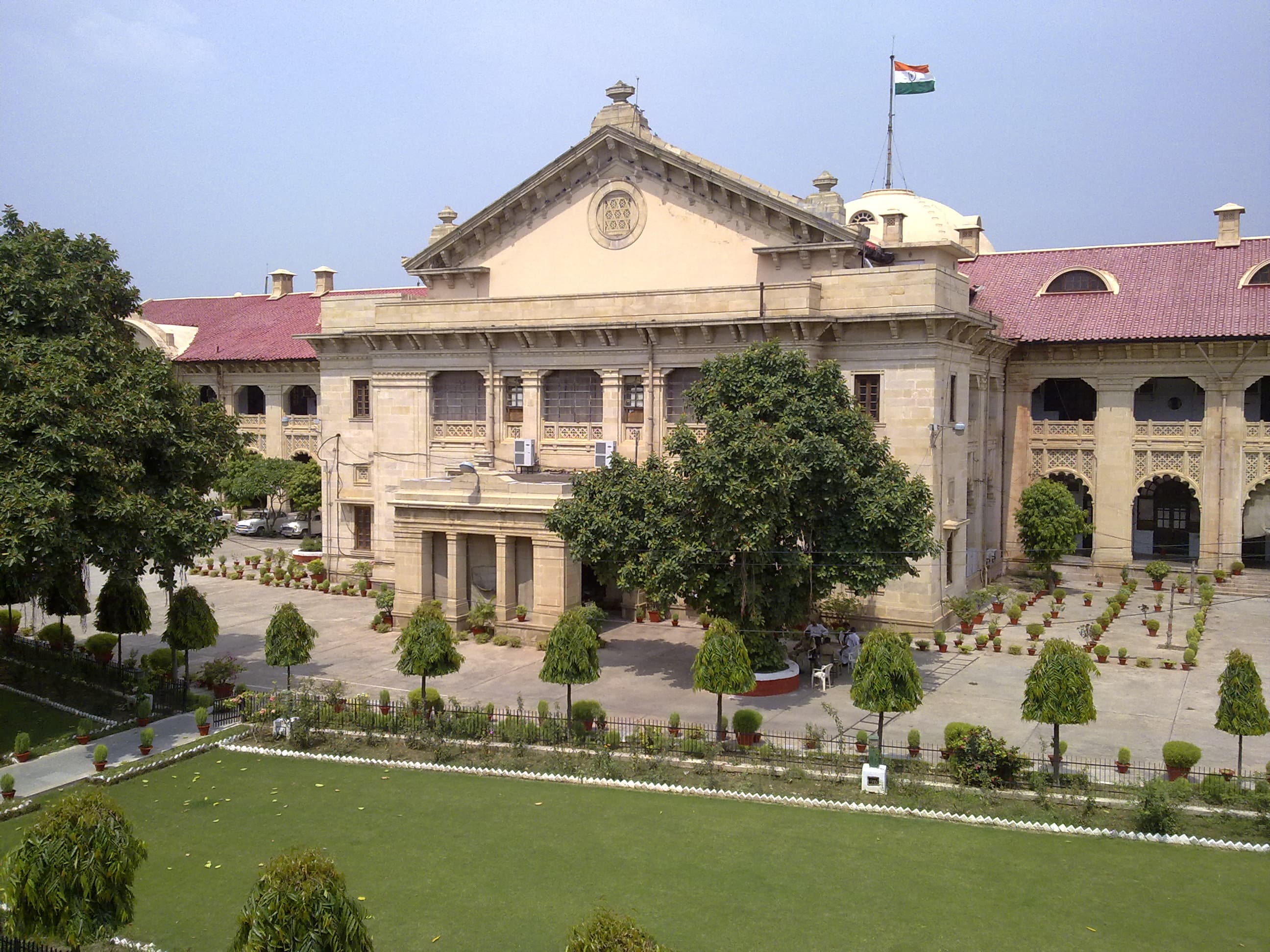
Anticipatory bail under BNSS Section 482 is the single most important legal remedy available to a person who fears arrest in Uttar Pradesh. When India replaced the colonial Code of Criminal Procedure (CrPC) with the Bharatiya Nagarik Suraksha Sanhita (BNSS) on 1 July 2024, the anticipatory bail provision moved from Section 438 CrPC to Section 482 BNSS — but with significant changes that every accused person and their family must understand before approaching court.
In UP, where political disputes, property conflicts, and false FIRs are common, anticipatory bail is often the difference between fighting your case from outside jail and enduring weeks of custody before regular bail is granted. The Allahabad High Court's Lucknow Bench and Sessions Courts across UP now handle hundreds of Section 482 BNSS applications every month.
This guide explains exactly what changed under BNSS, the conditions courts examine, the step-by-step procedure at Sessions Court and High Court level, and what happens if you are arrested despite having anticipatory bail. If you need immediate legal help, contact a criminal lawyer in Lucknow today.
Table of Contents
Need Immediate Legal Help?
If you're facing a legal emergency in Lucknow, don't wait. Contact experienced criminal lawyer Advocate Onkar Pandey for immediate assistance.
What Is Anticipatory Bail and Why Does It Matter in UP?
Anticipatory bail is a pre-arrest bail — a direction by the court that, if the applicant is arrested for a specified offence, they shall be released on bail immediately. Unlike regular bail, which is applied for after arrest, anticipatory bail is obtained in advance when a person has a reasonable apprehension of arrest.
In Uttar Pradesh, anticipatory bail is especially critical because:
- Property and land disputes often lead to false criminal complaints at police stations
- Family disputes — especially matrimonial cases — frequently trigger Section 498A (cruelty) FIRs
- Political rivalries can result in targeted arrests without prior notice
- UP police have wide powers to arrest in cognizable offences without a magistrate's warrant
A grant of anticipatory bail gives the applicant a legal shield: even if police arrive at the door, they must release the person on bail as per the court's direction. Without it, the accused can be held in custody for up to 15 days (or more in serious offences) before a regular bail hearing.
The provision is available for non-bailable offences only — if the offence is bailable, the accused has a right to bail at the police station itself and does not need court intervention.
BNSS Section 482 vs CrPC Section 438: Key Changes You Must Know
The Bharatiya Nagarik Suraksha Sanhita, 2023 came into force on 1 July 2024, replacing the CrPC in full. Section 482 BNSS is the new anticipatory bail provision. While the core concept remains the same, several important changes affect how applications are filed and decided in UP courts.
| Feature | CrPC Section 438 (old) | BNSS Section 482 (new, from July 2024) |
|---|---|---|
| Duration of AB | No fixed limit — could be till end of trial | Initial grant limited to 60 days; extension requires fresh application |
| Mandatory notice to PP/AG | Discretionary in most HCs | Notice to Public Prosecutor / Advocate General mandatory before final hearing |
| Special condition for serious offences | Not explicitly stated | Court may direct appearance before Investigating Officer within 7 days |
| Interim AB (ex-parte) | Allowed in urgent cases | Allowed; but must be followed by notice and hearing within a short period |
| Applicable courts | Sessions Court and High Court | Sessions Court and High Court (same hierarchy retained) |
The 60-day cap is the most significant practical change. Under the old CrPC, once granted, anticipatory bail often lasted indefinitely. Now, if the investigation is still ongoing after 60 days, the applicant must return to court and seek an extension — giving prosecutors a chance to oppose it with fresh material.
Engage an experienced criminal lawyer in Lucknow well before your 60-day period expires to file the extension application on time.
Conditions Courts Examine Under BNSS Section 482
When a Sessions Court or the Allahabad High Court hears an anticipatory bail application under BNSS Section 482, the judge applies the same four-factor test that was established under CrPC and confirmed by the Supreme Court in multiple decisions. These factors are now codified more clearly under BNSS.
The court will examine:
- Nature and gravity of the accusation: Is the offence a heinous crime (murder, rape, dacoity) or a lesser offence? Courts are far more cautious in granting AB for offences carrying life imprisonment.
- Antecedents of the applicant: Does the applicant have prior convictions or bail violations? A clean record helps significantly.
- Possibility of fleeing justice: Is there reason to believe the applicant will abscond? Roots in the community — fixed residence, family ties, business — work in the applicant's favour.
- Possibility of influencing witnesses or tampering with evidence: Courts impose strict conditions (like surrendering passport, reporting to police station weekly) to address this concern rather than refusing bail outright.
Additional conditions the court may impose under Section 482 BNSS include:
- Making the applicant available for interrogation when required
- Not leaving India without prior permission of the court
- Surrendering passport
- Depositing a surety amount
- Reporting to the nearest police station on specified days
If the offence involves economic crimes, organized crime, or terrorism under scheduled offences, UP courts apply significantly stricter scrutiny and may refuse AB altogether, requiring the applicant to seek regular bail after arrest.
Legal Consultation
Talk directly to Advocate Onkar Pandey
Explain your matter over a call or WhatsApp. If you take the case forward, the consultation fee adjusts into your overall fee, so there is no separate charge to begin.
Step-by-Step Procedure to File Anticipatory Bail in Uttar Pradesh
Filing an anticipatory bail application in UP follows a clear hierarchy. Understanding this process helps you act quickly when an FIR has been registered or when you have credible information that police intend to arrest you.
- Identify the applicable court: Under BNSS Section 482, an application must be filed before the Sessions Court of the district where the FIR is registered. Only after the Sessions Court rejects the application (or in exceptional urgent cases) should you approach the Allahabad High Court's Lucknow Bench directly.
- Gather essential documents: Collect the FIR copy, applicant's identity proof and address proof, surety details, and any evidence supporting your defence (call records, witnesses, prior disputes showing false implication).
- Draft the application: Your lawyer will draft the Section 482 BNSS application setting out: the facts, the apprehension of arrest, the grounds for relief, and the conditions the applicant is willing to accept.
- File and pay court fees: File at the Sessions Court office and pay the prescribed stamp duty. In Lucknow, filing is at the Civil Court Complex on Vidhan Sabha Marg.
- Attend the hearing: The Public Prosecutor will be given notice. Both sides argue. The judge may grant interim anticipatory bail pending final hearing.
- Comply with conditions: Once granted, strictly comply with all conditions. Any violation gives the prosecution grounds to apply for cancellation of bail.
If you already have an FIR and fear imminent arrest, do not wait. Contact a bail lawyer in Lucknow immediately. Delays can mean the difference between filing before arrest and filing from custody (as regular bail).
In some cases where there is no FIR yet but there is clear apprehension, you can still file — the court will assess whether the apprehension is genuine based on the circumstances described.
How Allahabad High Court Applies BNSS Section 482 in Practice
The Allahabad High Court, which has jurisdiction over all of Uttar Pradesh, has been actively interpreting BNSS Section 482 since July 2024. The Lucknow Bench handles matters from Lucknow, Unnao, Sitapur, Hardoi, Lakhimpur Kheri, and surrounding districts.
Key procedural points observed at the Allahabad HC Lucknow Bench:
- Prior Sessions Court rejection required: In routine cases, the High Court expects the applicant to have first approached the Sessions Court. Direct High Court filing is permitted only in extraordinary cases — such as where the Sessions Court cannot provide timely relief or where the arrest would cause irreparable harm.
- Interim AB with next-date conditions: The Lucknow Bench frequently grants interim anticipatory bail on the first date, listing the matter for final hearing within 4-6 weeks. This protects the applicant while the prosecution prepares its response.
- Strict scrutiny for SC/ST Act, POCSO, and UAPA: Anticipatory bail is not available for offences under the SC/ST (Prevention of Atrocities) Act at the Sessions Court level — it must be filed directly at the High Court. POCSO and UAPA matters face near-automatic refusal of anticipatory bail.
- 60-day review: After the 2024 BNSS change, High Court benches in UP have begun listing AB matters for review before the 60-day period expires to assess whether extension is warranted.
If your Sessions Court application has been rejected, an experienced Allahabad High Court lawyer can file the High Court revision with urgency and seek a stay on arrest pending the hearing.
What Happens If You Are Arrested Despite Anticipatory Bail?
One of the most critical protections under BNSS Section 482 is what happens at the moment of actual arrest. If a court has granted you anticipatory bail and police still arrest you, you have clear legal rights that must be enforced immediately.
Your rights at the time of arrest with an anticipatory bail order:
- Show the AB order to the arresting officer: Carry a certified copy of the anticipatory bail order at all times. The police are bound to release you in accordance with the bail conditions specified in the order.
- Production before magistrate within 24 hours: Even with an AB order, if you are formally arrested, you must be produced before a magistrate within 24 hours of arrest (excluding travel time). This is a fundamental constitutional right under Article 22 of the Constitution and Section 58 BNSS.
- Apply for bail immediately at the magistrate stage: At the production hearing, your lawyer should present the AB order to the magistrate and seek immediate release on the bail terms specified.
- File a habeas corpus if illegally detained: If police refuse to honour the AB order and continue to detain you, a habeas corpus petition before the Allahabad High Court can be filed on an urgent basis for same-day hearing.
Violations of anticipatory bail conditions by the accused can lead to bail cancellation. Similarly, if the investigating officer obtains new evidence of serious crime, they can approach the court for cancellation. Always follow your bail conditions strictly and keep your criminal defence lawyer informed of any developments in the investigation.
FIR Quashing vs Anticipatory Bail: Which Should You Pursue First?
Many clients facing false criminal complaints ask whether they should seek anticipatory bail or FIR quashing first. The answer depends on the urgency of arrest and the strength of the quashing grounds.
| Remedy | Purpose | Timeline | Best When |
|---|---|---|---|
| Anticipatory Bail (S. 482 BNSS) | Prevents arrest while case proceeds | 1–4 weeks for Sessions Court; 2–8 weeks for HC | Arrest is imminent; FIR is registered |
| FIR Quashing (S. 528 BNSS / Art. 226) | Permanently ends the criminal case | 3–12 months typically | FIR is clearly false, abuse of process, or settlement reached |
The standard strategy in UP courts is to first secure anticipatory bail to remain out of custody, and then simultaneously pursue FIR quashing. Quashing takes longer because the High Court requires the prosecution's response and a full hearing. Anticipatory bail is interim protection that buys you time.
In matrimonial cases involving Section 498A BNS (cruelty), courts in UP often combine both remedies — the husband and family members get anticipatory bail while the quashing petition is pending. You can learn more about FIR quashing procedure on our dedicated service page.
An experienced lawyer will advise you which court to approach first based on the specific FIR sections, the stage of investigation, and how quickly arrest is likely.
About the Author
Advocate Onkar Pandey is a practicing criminal lawyer at the Allahabad High Court's Lucknow Bench with extensive experience in anticipatory bail, regular bail, FIR quashing, and criminal defence matters. With years of courtroom experience across Sessions Courts and the High Court in Lucknow, Advocate Pandey has successfully represented clients in complex anticipatory bail matters under both CrPC and the new BNSS 2023 framework.
Advocate Pandey provides practical, result-oriented legal guidance to clients across Uttar Pradesh — from Lucknow, Unnao, Sitapur, and Hardoi to Lakhimpur Kheri and Barabanki. For an urgent consultation regarding anticipatory bail under BNSS Section 482, contact Advocate Onkar Pandey today.
Frequently Asked Questions
What is the difference between anticipatory bail under BNSS Section 482 and CrPC Section 438?+
The core concept is the same — both allow a person to obtain bail in anticipation of arrest for a non-bailable offence. However, BNSS Section 482 (effective 1 July 2024) introduces a 60-day initial duration cap that did not exist under CrPC Section 438. Under the old CrPC, anticipatory bail could last indefinitely until the trial ended. Under BNSS, after 60 days, the applicant must file a fresh application or extension. BNSS also makes it mandatory to give notice to the Public Prosecutor or Advocate General before the final hearing, whereas under CrPC this was discretionary in many High Courts. The hierarchy of courts — Sessions Court first, then High Court — remains unchanged.
Can I get anticipatory bail if no FIR has been filed yet?+
Yes. Anticipatory bail under BNSS Section 482 can be sought even before an FIR is registered, as long as the applicant can demonstrate a genuine and reasonable apprehension of arrest. Courts look at concrete material: threats received, prior disputes, statements made by complainants, newspaper reports, or any credible indication that police intend to arrest you for a specific offence. Vague or speculative fear is not enough. In practice, Allahabad HC and UP Sessions Courts regularly grant anticipatory bail in pre-FIR situations in matrimonial disputes, property cases, and land acquisition matters where criminal complaints are imminent. Engaging a bail lawyer in Lucknow at this early stage gives you the maximum strategic advantage.
How long does it take to get anticipatory bail in Lucknow?+
At the Sessions Court in Lucknow, an anticipatory bail application is typically listed within 2–7 working days of filing. If interim bail is sought on urgency grounds, the court may grant it on the first date itself, with notice to the prosecution. Final orders usually follow within 2–4 weeks. At the Allahabad High Court Lucknow Bench, the timeline is 3–8 weeks for a final order, though interim relief is commonly granted on the first hearing date. In extremely urgent situations — such as where arrest is expected within 24-48 hours — your lawyer can request the court to list the matter urgently (pesh-e-rehnumai) or file a mention before the presiding judge.
What documents are needed to file anticipatory bail under BNSS Section 482 in UP?+
The following documents are typically required for a BNSS Section 482 anticipatory bail application in Uttar Pradesh:
- Copy of the FIR (if registered) — obtainable from the police station or online via the UP Police portal
- Applicant's photo identity proof (Aadhaar, PAN, Voter ID)
- Applicant's residential proof showing roots in the community
- Surety's identity and address proof (a person who will guarantee the applicant's appearance)
- Any documentary evidence supporting innocence or false implication (receipts, messages, prior complaints)
- Vakalatnama (engagement letter for lawyer)
Court fees must also be paid at the time of filing. Your lawyer will draft the application and compile the complete paperwork.
Can anticipatory bail be cancelled in Uttar Pradesh?+
Yes. Anticipatory bail granted under BNSS Section 482 can be cancelled by the same court that granted it, or by a higher court, if there is sufficient cause. Common grounds for cancellation include: violation of bail conditions (such as not reporting to the police station, absconding, or leaving India without permission), tampering with evidence, threatening or influencing witnesses, or commission of a new offence during the bail period. In UP, the investigating officer or the State can file a cancellation application before the Sessions Court or High Court. The accused must be given an opportunity to be heard before bail is cancelled. If your bail is under threat of cancellation, contact your criminal defence lawyer immediately to respond to the application.
Is anticipatory bail available for SC/ST Act cases in Uttar Pradesh?+
This is a nuanced area. The Supreme Court in Prathvi Raj Chauhan v. Union of India (2020) held that anticipatory bail is not available at the Sessions Court level for offences under the Scheduled Castes and Scheduled Tribes (Prevention of Atrocities) Act, 1989. However, the High Court retains its jurisdiction under Article 226 and Section 482 BNSS to grant anticipatory bail in SC/ST Act cases where it is satisfied that the accusation is false or motivated. At the Allahabad High Court, such applications are entertained but face much higher scrutiny. A strong factual foundation showing false implication is essential to succeed in SC/ST anticipatory bail matters in UP.
What should I do immediately after getting anticipatory bail in UP?+
Once the court grants anticipatory bail under BNSS Section 482, take the following steps without delay:
- Obtain certified copies of the bail order from the court registry — carry one copy with you at all times.
- Furnish the surety bonds as directed in the order; bail does not take effect until sureties are accepted by the court.
- Comply with all conditions strictly — surrender passport if directed, report to the police station on specified days, and do not leave the country.
- Inform your lawyer immediately if police contact you or summon you for interrogation.
- Track the 60-day expiry date under BNSS and instruct your lawyer to file an extension application at least 2 weeks before expiry.
For ongoing guidance, contact Advocate Onkar Pandey.
Related Services
Get Expert Legal Advice in Lucknow
20+ years experience in criminal law at Lucknow High Court. Available 24/7 for emergencies.
Disclaimer: This article is for general information purposes only and does not constitute legal advice. Every case is unique and requires specific legal analysis. For advice specific to your situation, please consult Advocate Onkar Pandey or another qualified attorney in Lucknow.